
Senior Dog Training Adaptations: What I Learned When My Dog Turned Eleven
The morning I realized Rocky was getting old, we were at our usual training spot — a quiet corner of the park where we'd drilled sits, downs, and recalls for years. I gave our standard "down" cue, and instead of dropping smoothly like he always had, he hesitated. His front elbows bent, then straightened again. He looked at me, then at the ground, then back at me. And in that moment, I understood something I'd been avoiding: my dog's body was changing, and our training needed to change with it.
Senior dog training isn't about teaching old dogs new tricks. It's about adapting your expectations, your methods, and your goals to match where your dog is right now — not where they used to be. It's beautiful and frustrating and absolutely worth doing right. Here's everything I've learned about training an older dog, from physical adaptations to mental stimulation to knowing when to just let them rest.
First Things First: See Your Vet
Before you change anything about your senior dog's training routine, schedule a full veterinary workup. Blood work, urinalysis, joint palpation, heart check. You need a baseline. Your dog might be slowing down because of arthritis, but they could also have hypothyroidism, cognitive dysfunction (doggy dementia), dental pain, or heart disease. Training around an undiagnosed medical condition is not just ineffective — it can be cruel.
When I took Rocky for his senior checkup, the vet found arthritis in both hips and early signs of lumbar spondylosis. That explained the hesitation on the down cue. Lying down was painful for him. We started him on a joint supplement (glucosamine, chondroitin, and MSM, plus an omega-3 fatty acid supplement) and a pain management plan. Within two weeks, he was moving better and the "down" hesitation was gone. But I never would have known if I hadn't gotten those blood tests and X-rays.
Ask your vet specifically about: joint health, vision and hearing loss, dental pain, cognitive function, and heart condition. Each of these affects how you train. A dog with reduced hearing can't hear your clicker. A dog with cataracts might startle if you approach from their blind side. A dog with dental pain might not want to chew hard treats. Know what you're working with before you start working.
Adjusting Training Sessions for an Older Body
Training sessions for senior dogs should be shorter and lower-impact than what you did when they were two. Think of it like this: you wouldn't ask your seventy-year-old uncle to run a 5K with you. You'd take him for a gentle walk. Same principle applies.
Session length: aim for five to ten minutes, once or twice a day. I set a timer on my phone. When it goes off, we're done, even if Rocky looks like he wants to keep going. That's because dogs don't always show their discomfort until later. The stiffness that sets in an hour after training is their body saying "that was too much." By capping sessions, I prevent that feedback loop.
Physical behaviors to modify or avoid:
- Down from standing: Hard on arthritic hips and elbows. Teach a "down" from a sit instead, or use a soft surface like a yoga mat or rug. Better yet, teach a chin rest on a low platform or a padded bed so they don't have to fully recline.
- Sustained stays in down: Lying on a hard floor for three minutes can be genuinely painful for a dog with arthritis. Use a dog bed for any stationary work. For formal stays, I use a raised cot with padding.
- Jumping: No more jumping into the car, onto the couch, or into your arms. Invest in ramps or stairs. I got a collapsible ramp for the SUV and a set of memory foam stairs for the bed. Training "go to your bed" using a ramp is its own skill, and it's worth teaching.
- Spinning or circling: Fun tricks like "spin" put torque on the spine. If your dog has back issues, skip these. Substitute with a nose target (touching their nose to your palm on each side) — it gets the same mental engagement without the physical twist.
- Precision heelwork: Asking a senior dog to maintain a perfect heel position for blocks on end is exhausting for them. Use a loose leash walk as your standard and keep the heel practice to short, focused bursts of ten to fifteen seconds.
Rocky used to love doing "spin" for guests — it was his party trick. I had to retire it last year. It broke my heart the first time I asked for it, remembered his back, and redirected him to "touch" instead. He didn't know the difference. He got a treat either way. The lesson was for me, not for him.
Adapting to Sensory Loss
Many senior dogs lose hearing or vision gradually. The tricky part is that they compensate so well that you might not even notice at first. I only realized Rocky was losing his hearing when I noticed he wasn't waking up when I came home anymore. I used to be able to whisper his name from across the room — now I had to walk over and touch his shoulder.
Training with hearing loss: Replace verbal cues with hand signals. If your dog already knows a verbal cue, just add the hand signal before you say the word. Eventually phase out the word. The standard hand signals from AKC obedience work great, or you can make up your own. The important thing is that each signal is distinct and visible. A flat palm for "sit," a finger point for "down," an open hand for "stay." Use exaggerated, clear movements. Make sure your dog is looking at you before you signal.
You can also use vibration. A vibrating collar (not a shock collar — a vibration-only model) can act as a recall cue. Teach it by pairing the vibration with treats until your dog associates the buzz with "come get something good." This gives you a way to get their attention from a distance when they can't hear you call.
Training with vision loss: This is harder but absolutely doable. Your voice becomes your primary tool. Use consistent verbal cues with a happy tone. Keep the environment predictable — don't rearrange furniture, don't leave obstacles in walking paths. Use textured mats to signal different locations: a rubber mat by the door means "we're going out," a soft rug in the living room means "settle here."
I know a blind senior border collie named Whiskey whose owner trained him entirely with verbal cues and touch. He navigates the house by bumping his nose gently against walls to track his position. He still does nosework — scenting games use zero vision and give him enormous mental stimulation. It's proof that a dog's world doesn't end when their senses fade. It just changes shape.
Cognitive Dysfunction: Training Through the Fog
Canine cognitive dysfunction (CCD) affects about 30 percent of dogs over age eleven and up to 70 percent of dogs over age fifteen. Symptoms include disorientation, changes in sleep patterns, loss of housetraining, reduced interaction, and anxiety. If your senior dog starts forgetting cues they've known for years, CCD might be the culprit.
Training with CCD requires patience and a complete reset of expectations. Here's what helped us:
- Simplify to one cue at a time: Don't chain behaviors. Ask for sit, reward, pause, ask for down, reward. Don't ask for "sit, down, sit, down" in rapid succession — they'll get confused and frustrated.
- Go back to luring: If your dog no longer responds to a verbal cue, physically lure the behavior with a treat. If they used to sit on "sit" but now stare blankly, let them sniff the treat and guide their nose upward. When their butt hits the floor, reward. You're not starting over — you're finding a way in.
- Use high-value reinforcers: CCD dogs may not find kibble motivating anymore. Use chicken, cheese, hot dog, or anything that gets a reaction. The reward needs to be worth the mental effort.
- End on a success: If your dog can't figure out a cue after three tries, give them something easy — touch your hand, look at you — and reward. Always end the session with a win, even if it's a tiny one.
- Keep a consistent schedule: Dogs with CCD thrive on routine. Train at the same time of day, in the same location, with the same markers. Predictability reduces anxiety and helps them access stored information.
Rocky hasn't developed CCD yet, but I watch for signs. If he does, I have a plan. And if he forgets every cue he's ever learned, that's okay. We'll learn new ones together — or we'll just sit on the couch and I'll scratch his ears. Relationship comes first, always.
Mental Enrichment for the Aging Brain
Physical exercise decreases as dogs age, but mental exercise should stay high. In fact, mental stimulation becomes more important as a senior dog's world shrinks. It wards off cognitive decline, reduces anxiety, and gives them a reason to get up in the morning.
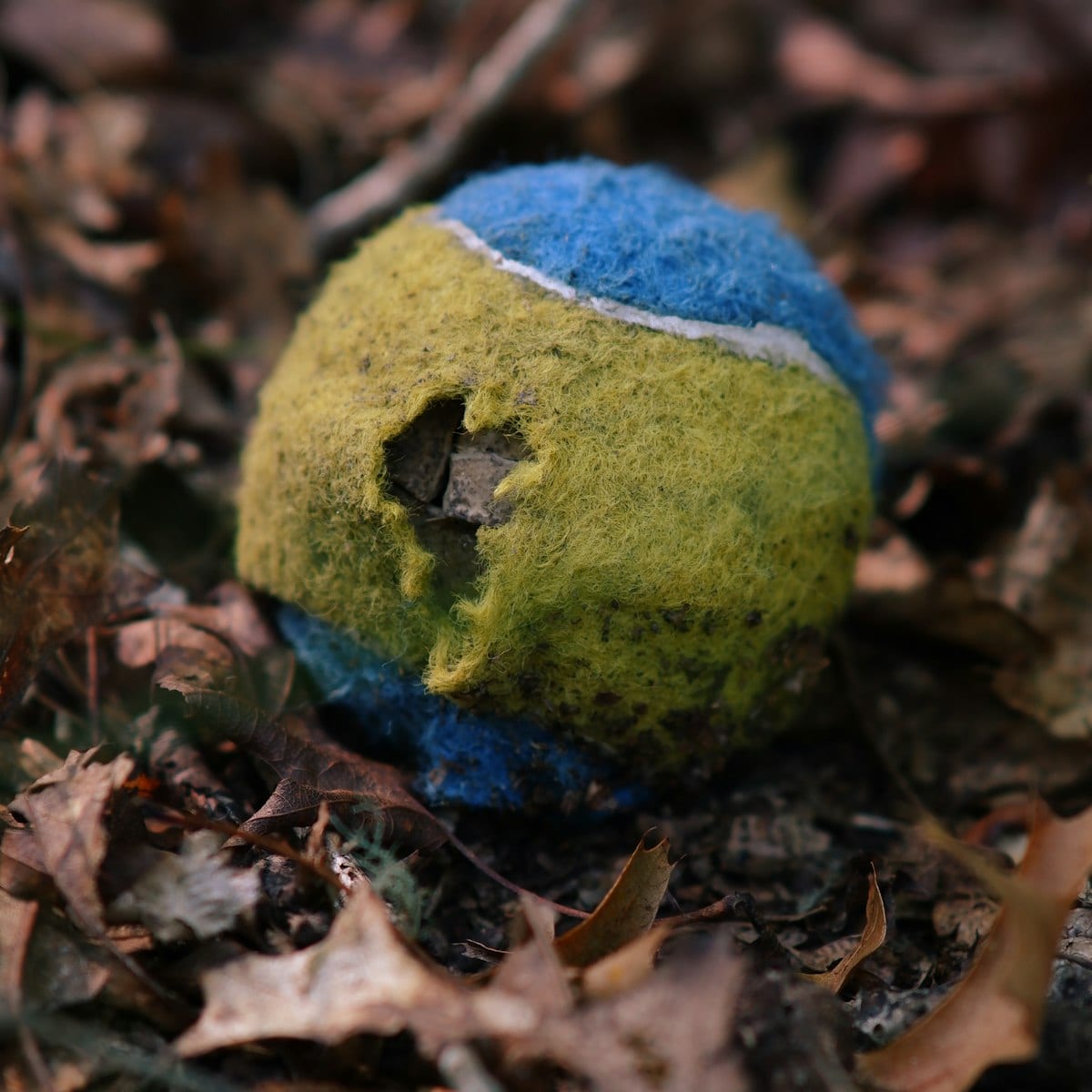
Nosework: The gold standard for senior mental enrichment. Hide treats around the house and let your dog find them. Start easy — place a treat in plain sight on the floor, let them eat it, then gradually increase the difficulty. Hide treats under a towel, inside a cardboard box, behind a chair leg. A fifteen-minute nosework session tires a dog out more than a thirty-minute walk. For Rocky, I use a muffin tin with tennis balls over each cup — he has to nudge the balls off with his nose to find the treats underneath. It takes him about ten minutes to work through all twelve cups. He loves it.
Puzzle toys: There are dozens of dog puzzle toys on the market. The Nina Ottosson line is excellent — they have levels from beginner to expert. A senior dog with good cognitive function can handle a level two puzzle. A dog with early CCD might need a level one. Watch how they interact: if they get frustrated and walk away, the puzzle is too hard. Simplify it by leaving some compartments open.
Trick training (gentle version): Teach new tricks that don't require physical strain. "Touch" (nose to palm) is great. "Speak" and "whisper" are fun if your dog still has their voice. "Go to your bed" is practical. "Chin rest" (resting chin on your hand) is useful for vet visits and nail trims. None of these require jumping, spinning, or lying down.
Scent discrimination: Once your dog is good at finding treats, level up to scent discrimination. Buy a few ounces of essential oils (clove, birch, anise, lavender — use the pure stuff, not synthetic fragrance oils). Put a drop on a cotton ball and let your dog sniff it. Reward. Then hide the cotton ball and ask them to find it. Scent work uses an entirely different part of the brain than visual or verbal cues. It's incredibly enriching for senior dogs.
The muffin tin game: This one is almost free. Take a standard muffin tin, place a treat in three or four of the cups, cover each cup with a tennis ball, and let your dog figure out how to remove the balls and get the treats. It exercises problem-solving skills and takes advantage of their natural foraging instinct.
Pain Management and Training
Here's the most important thing I can tell you about training a senior dog: if they're in pain, they can't learn. Pain floods the brain with stress hormones. It impairs memory, reduces focus, and makes even simple tasks feel impossible. If your senior dog is "stubborn" or "forgetful," check for pain first.
Signs of pain in dogs are subtle. You might not see limping or crying. Look for: decreased interest in walks, reluctance to go up or down stairs, stiff get-up after lying down, panting in cool weather, licking a specific joint, changes in posture (hind legs tucked under more), changes in appetite, or sudden aggression during handling. Any of these warrant a vet visit.
Pain management transformed Rocky's training. Before we started him on adequan injections and gabapentin, his training sessions were frustrating for both of us. He'd lie down and look at me like "why are we doing this?" He wasn't being difficult. He was hurting. Once the pain was under control, his old enthusiasm came back. He still can't work as long as he used to, but what he does give us is quality time.
Knowing When to Retire a Behavior
This was the hardest lesson for me. Some behaviors need to be retired as dogs age, and that's okay. Your dog doesn't care about "down" as a formal obedience skill. They care about making you happy and getting treats. If a behavior causes them physical discomfort, drop it. Replace it with something that doesn't hurt.
Rocky can't do a formal down stay on hard surfaces anymore. That's fine. I taught him "place" (go to his orthopedic bed) instead. Same function — he stays in one spot while I cook dinner — but without the joint pain. He doesn't know he's doing a different behavior. He just knows he gets a treat for going to his bed.
Retire behaviors with grace. Don't drill them one last time, don't test them, don't feel guilty. Your dog isn't keeping score. They're not thinking "I used to be able to do this and now I can't." That's your human brain projecting. They're thinking "I get treats when I go to my bed. This is great." Retire the behavior, replace it with something better, and move on.
The Gift of Slowing Down
Training a senior dog has taught me more than training any puppy ever did. It's taught me patience, observation, and humility. I can't brute-force a behavior with repetitions. I have to work with my dog's body, not against it. I have to listen more than I talk. I have to meet him where he is, not where I want him to be.
The sessions are shorter now. Five minutes, twice a day, in the living room on his memory foam bed. He does sits (with a treat lure over his nose — easier on his hips than a straight sit cue), touches, and nosework. We're working on a new trick where he puts his chin on a target platform, which will help me trim his nails without stressing him out. He's learning it slowly, but he's learning. And those five minutes are the best part of my day.
When I think about how much time we have left, it hurts. So I don't think about it. I just show up for our training sessions, one day at a time, grateful that this old dog still wants to learn alongside me.
No comments yet.